Source Fruit Scent Handmade Soap for Body Face and Hand Care
Find 30 fruit scent handmade soap options with customizable ingredients like glycerine, olive oil, and green tea. Buyers can compare solid and liquid forms, natural fragrances, and various weights suitable for all skin types.
Key considerations
Products List


Perfect Cosmetic Liquid Hand Soap
$350.00 - $1000.00
Moq: 25
Hangzhou Miuge Chemical Commodities Science & Technology Co., Ltd.

Liquid Soap Made with Organic Oils
$350.00 - $1000.00
Moq: 25
Hangzhou Miuge Chemical Commodities Science & Technology Co., Ltd.


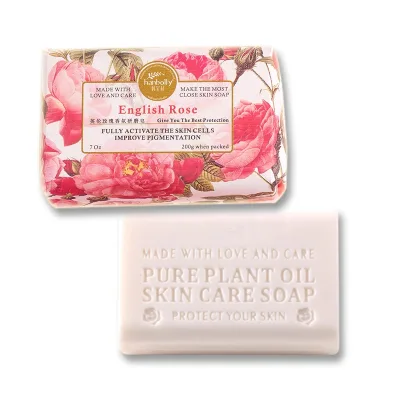





Comprehensive Sourcing Guide
Strategic Sourcing Guide for Fruit Scent Handmade Soap
The global B2B market for personal care products has seen a significant shift toward natural, plant-based formulations, with fruit scent handmade soap representing a high-growth niche. For procurement professionals, sourcing this specific category requires a nuanced understanding of ingredient profiles, manufacturing capabilities, and the specific technical constraints of the supply chain. This guide synthesizes available market data to provide a disciplined framework for evaluating suppliers and defining product specifications for fruit scent handmade soap. The focus remains on evidence-based attributes, ensuring that procurement decisions are grounded in verifiable product facts rather than marketing assertions.
Defining Technical Specifications and Formulation
The foundation of a successful procurement strategy for fruit scent handmade soap lies in precise technical definition. Based on observed product attributes, the core formulation typically relies on a "Main Ingredient" profile that includes Glycerine, Fruit, Olive Oil, Green Tea, Milk, Salt, Sulphur, and Charcoal. For a product specifically categorized under "Fruit Scent Handmade Soap," the presence of "Fruit" as a primary component is non-negotiable. The "Ingredient" attribute often lists "Mineral" or "Herbal" as secondary descriptors, suggesting that buyers must verify the specific botanical source of the fruit essence to ensure authenticity.
The physical form of the product is a critical differentiator. While the market includes "Liquid Detergent" and "Liquid" forms, the "Handmade" designation and the "Toilet Soap" classification strongly imply a "Solid" form. Buyers should explicitly confirm that the product is "Not Transparent," as transparency often indicates a different manufacturing process (such as melt-and-pour with high glycerin content) that may not align with traditional cold-process handmade standards. The "Wash Style" is consistently listed as "Water Wash," which is standard for solid bar soaps but requires clear communication to avoid confusion with oil-based cleansers.
Furthermore, the "Feature" set for these products typically includes Anti-Bacterial, Moisturizing, Cleaning, and Refreshing properties. A specific subset of products may also claim "Weak-Acid" or "Alkalescence" characteristics, which directly impacts the pH balance and suitability for different skin types. Since the "Skin Type" is generally listed as "All Skin Types," buyers must request pH test data to validate that the "Weak-Acid" claim is accurate, as this is crucial for maintaining skin barrier health. The "Color" options are diverse, ranging from White, Pink, Green, Yellow, to Purple, or fully "Customized," allowing for significant branding flexibility.
Compliance, Certification, and Standard Verification
Navigating the regulatory landscape for personal care products requires rigorous verification of standards. The supplied data indicates that products originate from specific regions in China, such as Jiangsu and Guangzhou. While the "prod_standard" field lists numerical dimensions like "100 x110x120" or "110 X110 X120cm," these appear to be packaging or palletization standards rather than chemical safety certifications. Buyers must not assume that a listed dimension equates to a safety standard like ISO or GMP without explicit documentation.
The "Medicated" attribute is explicitly noted as "Non-Medicated." This is a vital compliance distinction. If a supplier markets the soap as having therapeutic benefits beyond basic cleansing, they may inadvertently cross into pharmaceutical regulations. Procurement teams must ensure that all marketing materials and safety data sheets (SDS) align with the "Non-Medicated" classification to avoid regulatory penalties in destination markets. Additionally, the "Shelf Life" is observed to be "3 Years," a figure that buyers should verify through stability testing protocols rather than accepting as a blanket guarantee.
Certification checks should focus on the "Customization" capabilities and the "Logo" printing services. The ability to apply a "Customer Logo Printing" implies a level of quality control in the packaging and labeling process. Buyers should verify that the supplier adheres to the labeling regulations of their target export markets, particularly regarding ingredient lists and country of origin statements. The "prod_origin" is consistently listed as "China," with specific hubs in Jiangsu and Guangzhou. While these are major manufacturing centers, buyers must conduct on-site audits or request third-party audit reports to confirm that the manufacturing facilities meet international quality and labor standards.
Cost Drivers and Pricing Structures
Understanding the cost structure of fruit scent handmade soap is essential for budgeting and margin analysis. The observed price range in the market spans from $0.20 to $32,000 USD. This extreme variance is not indicative of unit price fluctuations for a single bar of soap but rather reflects the difference between a single unit sample and bulk pallet orders, or potentially the inclusion of packaging and logistics in the total cost. The "MOQ" (Minimum Order Quantity) ranges from 1 to 20,000 units, indicating a highly flexible supply chain that can accommodate both trial runs and large-scale distribution.
Several factors drive the final cost. The "Net Weight" is listed as "Customized," with observed standard weights of 60g, 100g, 150g, and 200g. Heavier bars naturally incur higher material and shipping costs. The "Main Ingredient" selection also plays a significant role; soaps featuring premium ingredients like Olive Oil or specific fruit extracts will cost more than those using generic glycerine bases. The "Feature" set, such as the inclusion of "Plant Essence" or "Natural Care" claims, often requires more expensive raw materials and stricter quality control, which increases the unit price.
Packaging is another major cost driver. The "prod_packing" options include "Carton," "Pallet," and "Standard Packaging or Customized." Customized packaging, which may involve unique shapes, colors, or printed branding, adds significant per-unit costs compared to standard bulk cartons. The "Standard Specifications" for packing are often defined as "72/96/144pcs /carton," which affects the efficiency of loading and shipping. Buyers should calculate the total landed cost, including the "Pallet" or "Carton" logistics, rather than focusing solely on the per-unit price.
Typical Applications and Market Segmentation
The versatility of fruit scent handmade soap allows for a broad range of applications. The "Application" field lists "Body, Face, Hand," confirming its suitability for general hygiene and personal care routines. The "Type" is categorized as "Toilet Soap / Beauty Soap," suggesting that the product can be positioned in both the mass-market hygiene sector and the premium beauty sector. The "Product Name" often includes "OEM Toilet Bar Soap," indicating that many suppliers operate as Original Equipment Manufacturers, creating private-label products for various brands.
The "Features" such as "Moisturizing," "Nourish," and "Refreshing" make these soaps particularly suitable for the "All Skin" and "All Skin Types" segments. This broad appeal is a key advantage for buyers looking to distribute to diverse retail channels, from supermarkets to boutique spas. The "Scent" is described as "Natural Fragrance," which aligns with the growing consumer demand for products free from synthetic fragrances. This attribute is particularly valuable for brands targeting eco-conscious consumers or those with sensitive skin concerns.
The "Age Group" is consistently listed as "Adult," which narrows the target demographic. While the product is safe for adults, buyers should verify if the formulation is suitable for children or if specific age restrictions apply. The "Keywords" associated with the product, such as "Toilet Soap," help in search engine optimization and product categorization within B2B marketplaces. Understanding these applications helps buyers tailor their marketing strategies and select the right product variants for their specific customer base.
Supplier Evaluation and Quality Control Protocols
Evaluating suppliers for fruit scent handmade soap requires a multi-faceted approach. The "Customization" attribute is a key indicator of a supplier's flexibility. A supplier that supports "Custom" requests for color, weight, and logo is likely to have a more robust production line capable of handling bespoke orders. However, customization introduces complexity, and buyers must assess the supplier's ability to maintain consistency across batches. The "prod_model" codes, such as "Cc-15-1," "Cc-24-1," or "ZMS-005," serve as internal identifiers. Buyers should request detailed specifications for each model to understand the specific formulation and production process associated with each code.
Quality control is paramount, especially given the "Non-Medicated" status and the natural ingredient profile. Buyers should implement a rigorous QC protocol that includes sampling for "Color" consistency, "Scent" strength, and "Form" integrity. The "Transparent" attribute is a useful QC checkpoint; if a product is supposed to be solid and opaque, any transparency may indicate a formulation error. Additionally, the "Shelf Life" of 3 years must be validated through accelerated aging tests to ensure the product remains stable and does not degrade or develop off-odors over time.
The "Location" of the supplier, specifically in Jiangsu or Guangzhou, China, offers logistical advantages but also requires careful management of shipping and customs. Buyers should verify the supplier's experience with international shipping and their ability to handle "Pallet" or "Carton" logistics efficiently. The "Standard Specifications" for packaging, such as "72/96/144pcs /carton," should be cross-referenced with the buyer's distribution requirements to ensure optimal space utilization.
Long-Term Procurement and Supply Chain Resilience
Sourcing fruit scent handmade soap is not just a transactional activity but a strategic partnership that requires long-term planning. The "Customization" capability suggests that the relationship between buyer and supplier can evolve over time, allowing for product iteration and brand development. However, this flexibility must be balanced with supply chain resilience. Buyers should assess the supplier's capacity to scale production from small MOQs of 1 unit to large orders of 20,000 units without compromising quality or lead times.
The "Main Ingredient" supply chain is another critical consideration. Since the product relies on "Fruit," "Olive Oil," and other natural components, buyers must ensure that the supplier has secure and sustainable sourcing channels for these raw materials. Fluctuations in agricultural markets can impact the availability and cost of these ingredients, potentially disrupting production. Establishing a clear communication channel regarding ingredient sourcing and inventory management is essential for mitigating these risks.
Finally, the "Logo" and "Customized" packaging options offer opportunities for brand differentiation. Buyers should plan for long-term branding strategies that leverage these customization features. By working closely with suppliers who support "Customer Logo Printing" and "Customized" colors, buyers can create a unique market presence that stands out in a crowded field. The "Net Weight" and "Color" options provide further avenues for product line expansion, allowing buyers to cater to different consumer preferences and price points over time.
Conclusion
Sourcing fruit scent handmade soap requires a meticulous approach that balances technical specifications, regulatory compliance, and cost management. By leveraging the observed attributes such as "Fruit" as a main ingredient, "Solid" form, and "Non-Medicated" status, buyers can define clear product requirements. The flexibility in "Customization," "Color," and "Weight" offers significant opportunities for brand differentiation, provided that quality control and supply chain resilience are maintained. As the market continues to evolve, a disciplined, evidence-based procurement strategy will ensure that buyers secure high-quality products that meet the demands of modern consumers while maintaining operational efficiency and compliance.
FAQs
What are the main ingredients in fruit scent handmade soap?
The main ingredients typically include Glycerine, Fruit, Olive Oil, Green Tea, Milk, Salt, Sulphur, and Charcoal. Buyers should verify the specific botanical source of the fruit essence to ensure authenticity and check for Herbal or Mineral descriptors in secondary ingredients.
Can I customize the color and logo of the soap?
Yes, customization is available for colors like White, Pink, Green, Yellow, or Purple, and customer logo printing is supported. Buyers must confirm that the supplier adheres to labeling regulations of their target export markets regarding ingredient lists and country of origin statements.
What is the shelf life and form of the product?
The observed shelf life is 3 years, and the product form is solid and not transparent. Buyers should verify stability through testing protocols rather than accepting the figure as a blanket guarantee, ensuring the opaque form aligns with traditional cold-process handmade standards.
Which skin types are suitable for this soap?
The product is suitable for all skin types and applications including body, face, and hand. Buyers must request pH test data to validate claims of weak-acid or alkalescence characteristics, as this is crucial for maintaining skin barrier health across different demographics.
What are the minimum order quantities and pricing ranges?
The MOQ ranges from 1 to 20,000 units with a price range of 0.2 to 32,000 USD. This variance reflects unit samples versus bulk pallet orders, so buyers should calculate total landed costs including packaging and logistics rather than focusing solely on per-unit prices.
Where are the manufacturers located and what are their standards?
Manufacturers are located in Jiangsu and Guangzhou, China, with standards often listed as numerical dimensions like 100 x110x120. Buyers must not assume these dimensions equate to safety certifications like ISO or GMP without explicit documentation and should request third-party audit reports.